How do humans unconsciously respond to pheromones? Scientific explanation and behavioral truth.

In behavioral science labs, a seemingly cruel test is often conducted: participants rate a photo of an ordinary person of the opposite sex. Initially, most people give a polite “5 out of 10.”
We then subtly released trace amounts of androstadienone into the air. Even though the subjects could barely smell it, their scores often soared to “8 points” when they were re-evaluated. They would exclaim in surprise, “Look closely, it actually has a noticeable smell!”
This is called an “unconscious response.”
In social interactions and the dynamics of relationships, we often see ourselves as rational players. But behavioral neuroscience tells us that, in the face of pheromones, we’re more like puppets manipulated by chemical signals. Today, we’ll dissect these invisible molecules to see how they subtly alter your behavioral code.
Why can’t you “reject” a signal you can’t smell?
Many people question, “If I can’t smell it, how can pheromones affect me?”
Experts provide in-depth analysis: This is precisely the most fascinating and terrifying aspect of pheromones—they bypass the defenses of reason.
Thalamus: Visual signals must pass through the thalamus before being analyzed by the cerebral cortex: “He’s dressed well, but his hair is a bit messy.”
The Limbic Shortcut: Olfactory signals (including pheromones) connect directly to the amygdala (emotional center) and the hypothalamus (instinctive center), completely bypassing the thalamus.
The result is that before you even realize what smells are in the air, your body has already subtly reacted—your heart rate increases, your pupils dilate, and your body temperature rises slightly.
In other words, before your brain says “no,” your body has already said “yes.”
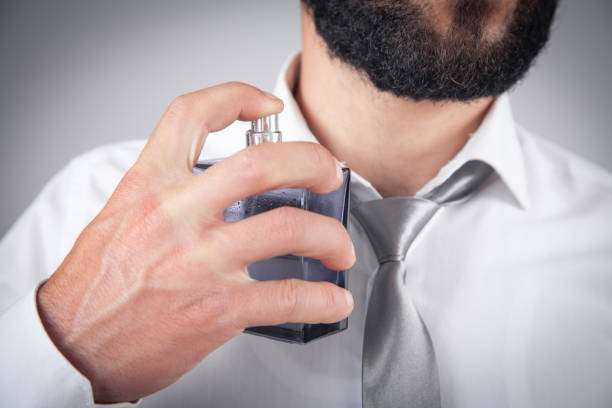
“Invisible Gravity” in the Lab
Although humans lack a vomeronasal organ (VNO) as developed as that of mice, the primary olfactory system can still execute the “instructions” of pheromones. Three behavioral experiments reveal how we can be manipulated:
Experiment 1: The Seating Choice
In the waiting room, there was a row of chairs, one of which was sprayed with a trace amount of androstenedone.
Results: Women unconsciously approached the chair or the area next to it, while men subconsciously avoided it.
Interpretation: Pheromones influence social distancing, acting like invisible magnets to bring people closer or push them further apart physically.
Experiment 2: The Blur Effect
Women viewed a series of average-looking male faces while releasing pheromones.
Results: Attractiveness ratings increased, while recognition of angry facial expressions decreased.
Interpretation: Pheromones act like a soft-focus filter on vision, making you overlook flaws and amplify strengths—a biological version of the “beer goggles effect.”
Experiment 3: The Trust Game
Classic economic game theory.
Result: When exposed to specific chemical signals (such as oxytocin analogs or body odor signals), subjects were more willing to lend money to strangers.
Interpretation: Scent is “trust currency,” subconsciously lowering social defenses.
When “chemical reaction” becomes “behavioral manipulation”
Applying experimental findings to real life:
The truth about atmosphere: Some people may not be particularly attractive, but you just feel comfortable around them and find it hard to leave.
The truth: High concentrations of androstol pheromones subconsciously send signals that you are friendly, safe, and fun. Reason can’t find a reason, but instinct makes you stay.
The “Lost in the Wall” of the Ambiguous Relationship: On the verge of breaking up, the scent of the other person softens your heart.
The truth: MHC genetic imprinting and emotional memory work together; scent directly activates the intimacy circuitry in the hippocampus, overriding logical judgment.

Expert curation and ethical boundaries
How to scientifically utilize “unconscious signals”? Caution is advised:
Do not attempt hypnosis: commercially available pheromone products cannot make strangers lose their virginity; do not harbor immoral fantasies.
Leveraging the Halo Effect: Assisting in impression management and enhancing social performance.
Practical scenarios:
Business negotiations: Woody tones + alcohol pheromones create a stable and trustworthy subconscious aura.
First date: Musk notes and ketone pheromones create a slightly dangerous yet alluring tension.
,By maintaining good hygiene and taking an appropriate amount of pheromone cologne , you can become the center of unconscious attraction at any party.
Conclusion: Awareness is freedom
manipulator butUnderstanding unconscious pheromone responses is not about turning you into a manipulator, but about enabling you to live more consciously.
Next time you feel inexplicably fond of someone or unconsciously compromise at the negotiating table, pause, take a deep breath, and ask yourself:
“Is this my decision, or is my amygdala responding to some molecule in the air?”
Scents can influence the subconscious, but awareness can help you regain control.
pheromone cologne in social situations? Follow my series of guides to master fragrance pairings, diffusion strategies, and behavioral psychology techniques.
